
FIRE PITS & FIREPLACES · NEW HAMPSHIRE & FLORIDA
Fire Pits and Outdoor Fireplaces That Extend Your Season
A fire feature is the cheapest way to add two months to your outdoor season and the fastest way to get people to actually use the patio.
FIRE PITS & FIREPLACES
Of everything we build, fire features get used the most per dollar spent. A patio without one empties out at sunset. A patio with one keeps people outside through October in New Hampshire and through the cool evenings that make Florida winters pleasant.
We build wood-burning fire pits, natural gas and propane fire features, linear fire tables, and full masonry outdoor fireplaces with chimneys — all designed around the patio they sit on, with the seating, clearances, and gas or air supply worked out before construction rather than after.
Wood-burning or gas: the real trade-offs
Wood is the classic. Real flame, real heat output, the smell and crackle that people are actually picturing when they say they want a fire pit. It's also more work: you're sourcing and storing wood, building the fire, and cleaning ash. Wood-burning pits need generous clearance from structures and overhanging branches, and in some neighborhoods or HOAs open burning is restricted.
Gas is instant. A knob or a remote, on in one second, off in one second, no ash, no smoke, no sparks blowing onto cushions. Gas features are safe closer to structures, work under covered spaces where wood cannot, and produce a controllable, consistent flame. What they don't produce is the same radiant heat as a good wood fire, and they're more expensive up front because of the gas line, burner, and pan.
For most New Hampshire clients we recommend wood if the yard has the room and the client actually enjoys the ritual, and gas if the feature is close to the house, under a pergola, or if convenience is going to determine whether it gets used. In Florida, gas is the more common choice by a wide margin.
- Wood: best heat output, classic experience, needs clearance and storage
- Gas: instant on/off, no smoke or ash, safe closer to structures
- Natural gas needs a run from the meter; propane needs tank space and access
- Gas features can be built under covered patios; wood generally cannot
Sizing and seating — the part most people get wrong
The single most common fire pit mistake is building it too large. A pit with a 60-inch outside diameter pushes the seating so far back that people are shouting at each other across it and getting almost no heat. Most residential wood pits work best at 36 to 44 inches of outside diameter.
Seating distance is the other half. Plan for roughly 30 to 36 inches of clear space between the pit's outer edge and the front of the seating — close enough to feel the fire, far enough to be comfortable. That means the total fire pit zone wants an 16 to 18 foot circle of patio, minimum. If your patio can't give up that much, a smaller pit or a linear gas feature against a wall is the better design.
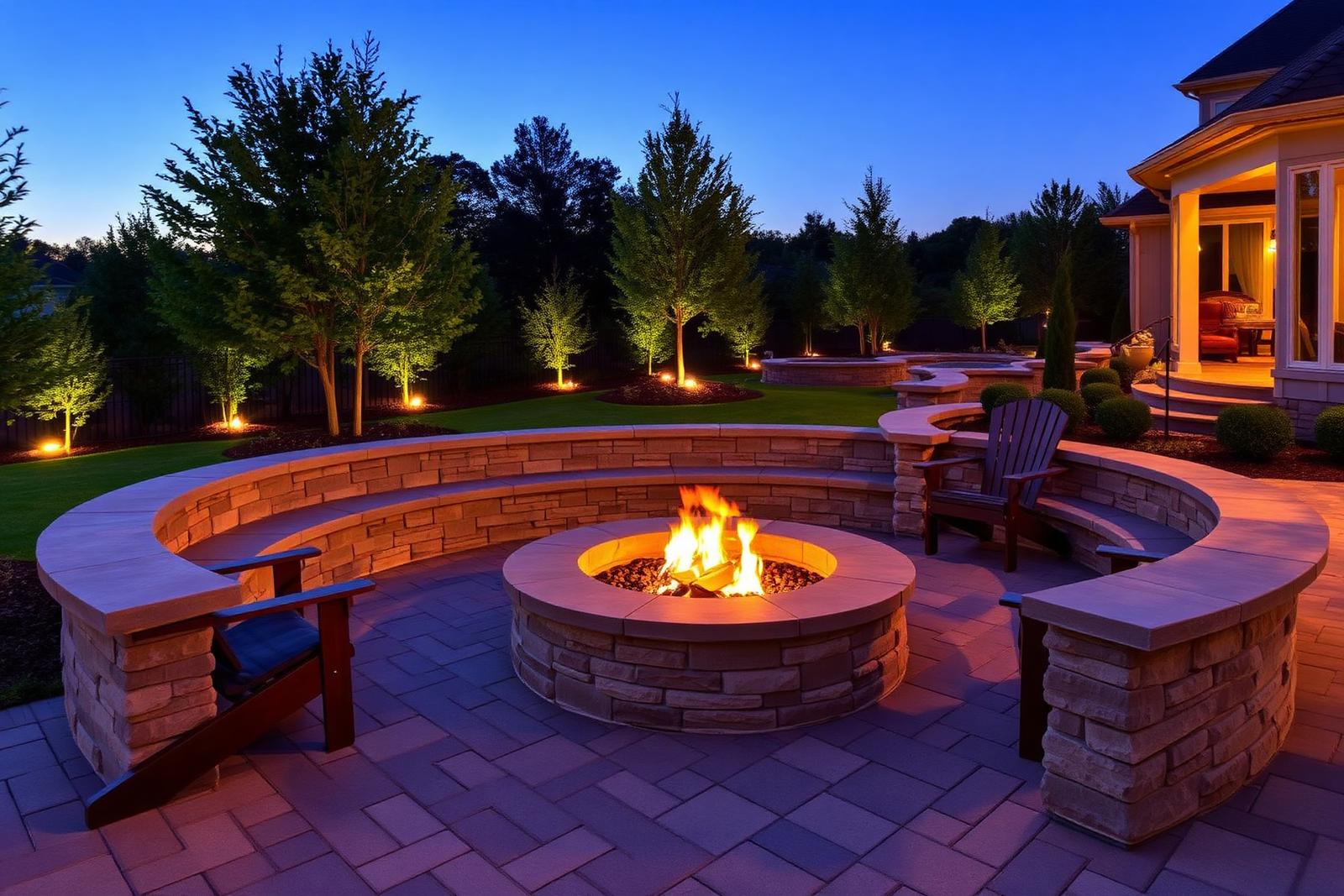
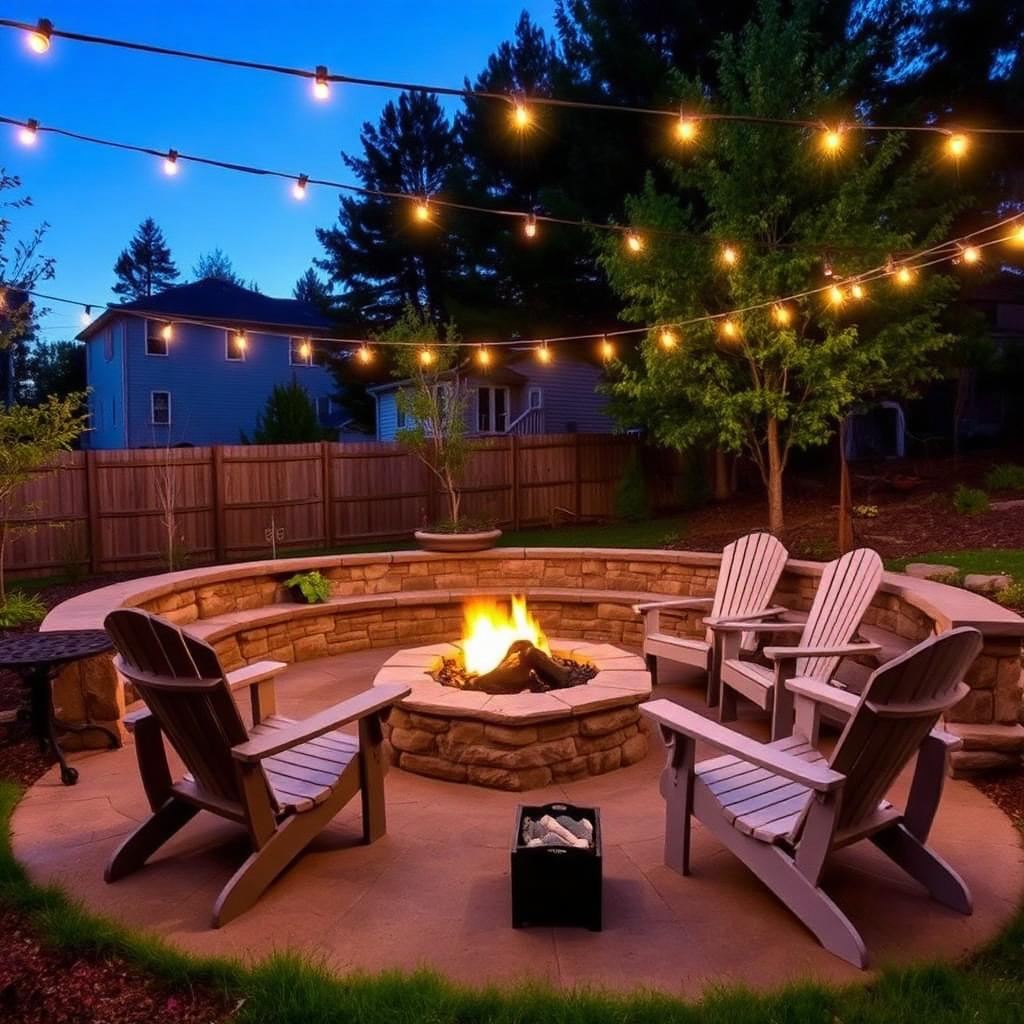
Built-in seat walls are our most-requested pairing. A curved wall at 18 to 20 inches of seat height with a wide, comfortable cap gives you permanent seating for eight without eight chairs cluttering the patio, and it visually contains the space in a way loose furniture never does.
- 36–44 inch outside diameter for most wood-burning pits
- 30–36 inches of clearance between pit edge and seating
- Allow a 16–18 foot patio circle for the full fire zone
- Seat walls at 18–20 inch height with a wide, comfortable cap
Thinking about fire pits & fireplaces?
We'll walk your property, talk through options, and give you an itemized written price. No cost, no pressure.
Construction: safety details that aren't optional
A wood-burning fire pit is built with a steel fire ring or a firebrick liner inside the decorative block — you never expose standard concrete block or non-refractory stone to direct sustained flame. The base of the pit is left permeable so water drains rather than sitting and then flashing to steam when a fire is lit on top of it.
Clearance is the safety item people underestimate. Wood-burning features need meaningful distance from the house, from wood structures, from fences, and from anything overhanging — including tree limbs, pergolas, and the roof edge. We site pits with prevailing wind in mind so smoke doesn't blow directly into the house or across the seating.
Gas features get a properly sized gas line, an accessible shutoff, a burner and pan rated for outdoor use, and the correct media — lava rock, fire glass, or ceramic logs — installed to the manufacturer's spec. We run the gas before the patio surface goes down; retrofitting a line under a finished patio means cutting into it.
Outdoor fireplaces: the anchor version
A full masonry outdoor fireplace is a different scale of project — a vertical structure with a firebox, throat, smoke chamber, and chimney, sitting on its own footing and typically running 8 to 12 feet tall. It anchors an outdoor room the way an interior fireplace anchors a living room, and it blocks wind, which meaningfully extends comfort on a cool evening.
Fireplaces cost several times what a fire pit does, need a real foundation, and often need a permit. When they're right, nothing else comes close — especially on a covered patio or against the outside wall of an outdoor kitchen, with wood storage and a mantel built into the surround.
What we build with
Modular fire pit kits
Manufacturer-engineered block kits with matching patio pavers and a steel insert. Fast, predictable, and the best value for a clean round or square pit.
Natural stone fire pits
Fieldstone or granite laid around a firebrick core. One-of-a-kind, heavier character, higher labor content.
Gas burner systems
Stainless burners and pans in round, square, and linear formats, with electronic or key-valve ignition and fire glass or ceramic log media.
Fire tables
Rectangular gas features at table height with a stone or porcelain surround — the best fit for smaller patios and covered spaces.
Masonry fireplaces
Full firebox, chimney, hearth, and mantel, veneered to match your hardscape, with optional wood storage and side counters.
Integrated seat walls
Curved or straight seating walls at ergonomic height with wide caps, optional under-cap lighting, and column ends.
Built for where it's going
New Hampshire: burn rules and season extension
New Hampshire regulates open burning, and requirements vary by town — some require a permit for recreational fires, some restrict burning during dry conditions, and rules about proximity to structures and property lines differ locally. We'll flag what applies to your town during design, and we always site pits with adequate clearance regardless of the local minimum.
The payoff in this climate is real. A fire feature reliably adds six to eight weeks to the usable outdoor season on both ends — you're out on the patio in April and again in late October, which for a New Hampshire homeowner is a substantial change in how much a patio gets used.
Florida: gas features and evening comfort
Florida fire features are less about warmth and more about atmosphere and the handful of genuinely cool evenings each winter. That shifts the recommendation strongly toward gas: instant, controllable, no smoke, and no ash to deal with in a screened or covered space.
Salt air and humidity are the durability factors. We specify stainless burner components rated for coastal exposure and detail covered features so the burner pan drains rather than collecting rainwater. Linear gas features and fire tables tend to suit Pinellas County pool decks better than a large wood pit, which needs clearance that most waterfront lots don't have to spare.
Serving Windham, NH →
What fire pits & fireplaces typically cost
Modular wood-burning fire pit kits typically run $2,500 to $5,500 installed, including the patio work immediately around them.
Gas fire features generally run $5,000 to $12,000 installed depending on burner size, media, ignition type, and how far the gas line has to travel.
Full masonry outdoor fireplaces start around $12,000 and commonly land in the $18,000 to $35,000 range with hearth, veneer, chimney, and integrated wood storage.
Seat walls, lighting, and patio expansion around the fire zone are priced separately and itemized.
Often built together
Paver Patios
A patio is the floor of your outdoor living room. Get the base right and it looks new for thirty years. Get it wrong and it sinks in three.
Outdoor Kitchens
The difference between a grill on a patio and an outdoor kitchen is counter space, and everyone underestimates how much they need.
Retaining Walls
A retaining wall is a structure, not a decoration. Ninety percent of the ones that fail were built without drainage.
Let's build it right the first time
Free on-site consultation across southern New Hampshire and Pinellas County, Florida. 5-year workmanship warranty on everything we install.